Horizontal Scaling Limits of Live API Calls in Agent Benchmark Harnesses
Shared rate limits, state, and costs cap how far live-API evals scale.
For API-based agent evals at scale, a viable architecture uses isolated, stateful simulators for parallel trials and live APIs for continuous fidelity verification. Live calls become a structural bottleneck because workers share rate limits and mutable state while accumulating per-call costs. Horizontal scaling requires a different evaluation boundary to make additional workers effective.
Why benchmark harnesses need horizontal scale in the first place
An agent must receive the result of one call before choosing the next action, and a later read may depend on an earlier write. Live API-Bench, published by Elder et al. at EACL 2026, evaluates these sequential tool-use pipelines across many databases and hundreds of invocable tools. Its human-authored queries and ground-truth API sequences make those dependencies part of the test. The sequence itself cannot simply run in parallel.
Parallelism therefore belongs primarily between trials, where separate executions can proceed independently without changing the task being measured. StateM records 445 public-submission trials across 89 tasks on Terminal-Bench 2.1 to back up its accuracy claims. Running such trials serially makes the wall-clock budget grow with both the number of executions and the length of each trajectory. A harness needs horizontal scale because a sound evaluation needs full runs repeated, and speeding up a single tool call cannot meet that need.
What live API calls actually carry into a parallel evaluation run
A live API connects each worker to constraints outside the harness. Rate limits give all workers on an account or key one allowance to share. Shared mutable state gives concurrent trials access to the same changing world, while per-call pricing charges for the work each trial performs. None of these properties disappears when execution moves into separate containers. Worker isolation is not external service isolation.
The distinction becomes concrete when one trial creates a resource and another lists resources of that type. The second trial can observe the first trial’s write even though their local processes share nothing. Parallel CI runs have the same problem when tests use a live third-party API without namespace isolation. Adding workers also uses up the shared request allowance faster and spends more money in the same time.
These constraints also reinforce one another under load. Backoff extends a trial’s duration, increasing the window in which concurrent writes can alter what it sees. A corrupted trial may then require another run, which consumes more calls and incurs further cost. The liabilities are distinct, but their effects compound.
How rate limits turn parallelism into self-defeating throttle cascades
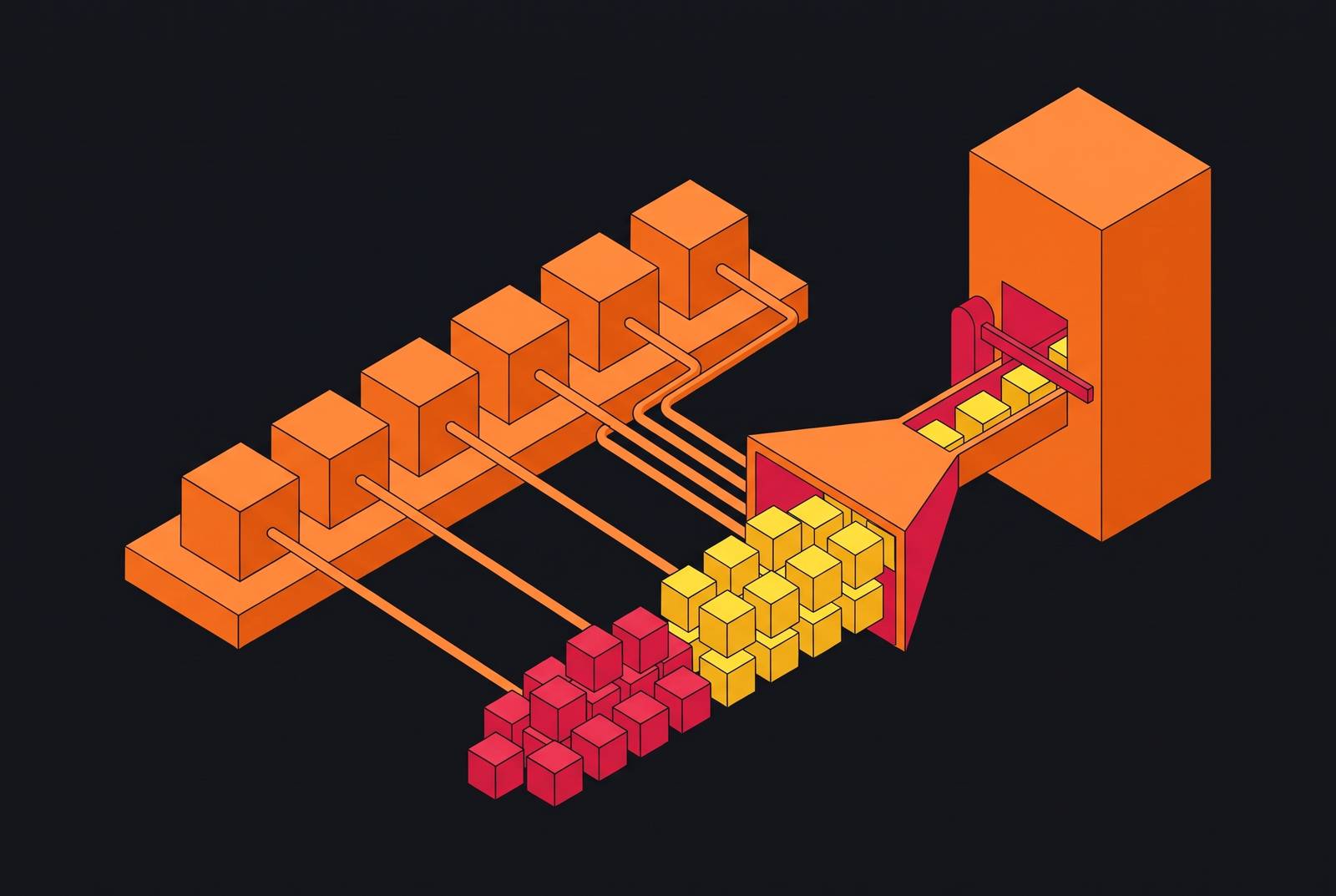
When workers share a rate-limited key, their requests compete for the same allowance. The workers that encounter the limit enter backoff while queued work accumulates behind the waiting period. When that period ends, the resulting burst can immediately trigger the limit again. More workers then expand the queue of unfinished evaluations. Concurrency becomes a source of repeated congestion.
Amdahl’s law explains why parallel execution helps less as more of the work has to run in sequence. In this case, backoff and retry handling consume time that additional evaluation workers cannot recover. Repeated throttle bursts add overhead on top of that limit, so throughput can fall even after it has stopped improving. This can put the workable concurrency bound well below what the CI or evaluation platform allows. Available infrastructure is no longer the binding constraint.
The damage can also extend beyond elapsed time. Long-horizon agents depend on reconstructing mutable state throughout a trajectory, and a mid-run 429 can disrupt that reconstruction for the remaining steps. An injected rate-limit storm, in which errors fire for the first N calls and then pass through, exposes this distinction. Retry logic must contend with an infrastructure event that the agent may treat as a task-level signal. Even after a retry succeeds, the trajectory may still be invalid.
How shared mutable state makes parallel trial results unreliable
A trial can avoid throttling and still produce an invalid score. If trial A creates a resource before trial B lists that resource class, B encounters a world changed by another execution. Its behavior no longer reflects only its assigned task and starting conditions. The evaluator may nevertheless compare the result with the original ground truth. Successful completion can conceal an invalid measurement.
Namespace isolation is the standard CI mitigation for this problem. Per-shard unique identifiers or per-tenant data partitions separate test data, but they depend on support from the external service. Many live third-party APIs do not expose per-test isolation primitives. Stateless mocks remove that dependency by returning canned responses. They also remove the cumulative state changes that make a create-then-read sequence meaningful, replacing cross-trial interference with an incomplete model of the task.
Live API-Bench addresses the difficulty of APIs that are “proprietary, heterogeneous, and difficult to share” by transforming SQL datasets into interactive API environments. That design preserves an environment for dependent actions without requiring evaluation against shared external state. Harness-Bench uses sandboxed offline environments to control live-service drift and scheduling variability, while studying the effects of harness configuration. These approaches expose the central design tension. Multi-step evaluation needs real state transitions, but each parallel trial needs its own world for those transitions.
How per-call cost compounds with the trial volumes that credible evaluation requires
With per-call pricing, how much an evaluation covers directly affects how much it costs. More trials require more calls, and longer tasks require more calls within each trial. Parallel workers accelerate that spending without reducing the amount of work required for a complete evaluation. Retrying throttled or contaminated runs adds work that contributes no new task coverage. Cost thus constrains both the evaluation design and its execution budget.
StateM makes the economic pressure explicit by contrasting frontier-model expenditure with sharply lower expenditure using a cheaper model in the same harness. That comparison concerns model API costs, which are distinct from charges for the external tools an agent invokes. Both, however, can attach a price to repeated execution. An accuracy claim still needs the same number of trials even when each call seems cheap.
These costs may lead benchmark designs to use fewer trials, test a smaller range of tasks, or switch to synthetic environments. Fewer trials widen uncertainty, while narrower or less realistic tasks change what a result can establish. Live API-Bench’s locally hosted API environments provide realistic breadth without the operational cost of relying on external third-party services at evaluation scale. The choice is therefore not simply whether an evaluation is affordable. It is whether the available budget permits enough representative trials to justify the precision implied by the reported result.
Why harness architecture — not just API choice — determines whether these failures occur
Changing providers may change the point at which throttling begins, but it does not remove a harness’s dependence on shared external allowances. A different API may still have shared state and usage-based charges. The boundary between evaluation logic and live services creates these structural failures. A harness that leaves this boundary unchanged retains the same categories of failure, even if their immediate severity differs. Provider choice cannot substitute for execution design.
Harness-Bench shows that completion rate, process quality, efficiency, and failure behavior can vary widely for the same tasks and model when the harness configuration changes. The harness is therefore part of what produces a result. StateM calls the corresponding opportunity “harness scaling,” improving the runtime so that more existing model capability becomes completed work without changing model weights. Its mechanisms include durable states, phase-local context, checked transitions, recoverable runbooks, and versioned procedural practices. These address execution and state ambiguity within the runtime.
Those findings locate the engineering lever for external API contention more precisely. The evaluation boundary must set out which state belongs to a trial, which failures it tests on purpose, and which external dependencies stay in its execution path. Without that separation, more workers bring more exposure to live-service variability as well as more evaluation throughput.
How can realistic API responses be tested without hitting production?
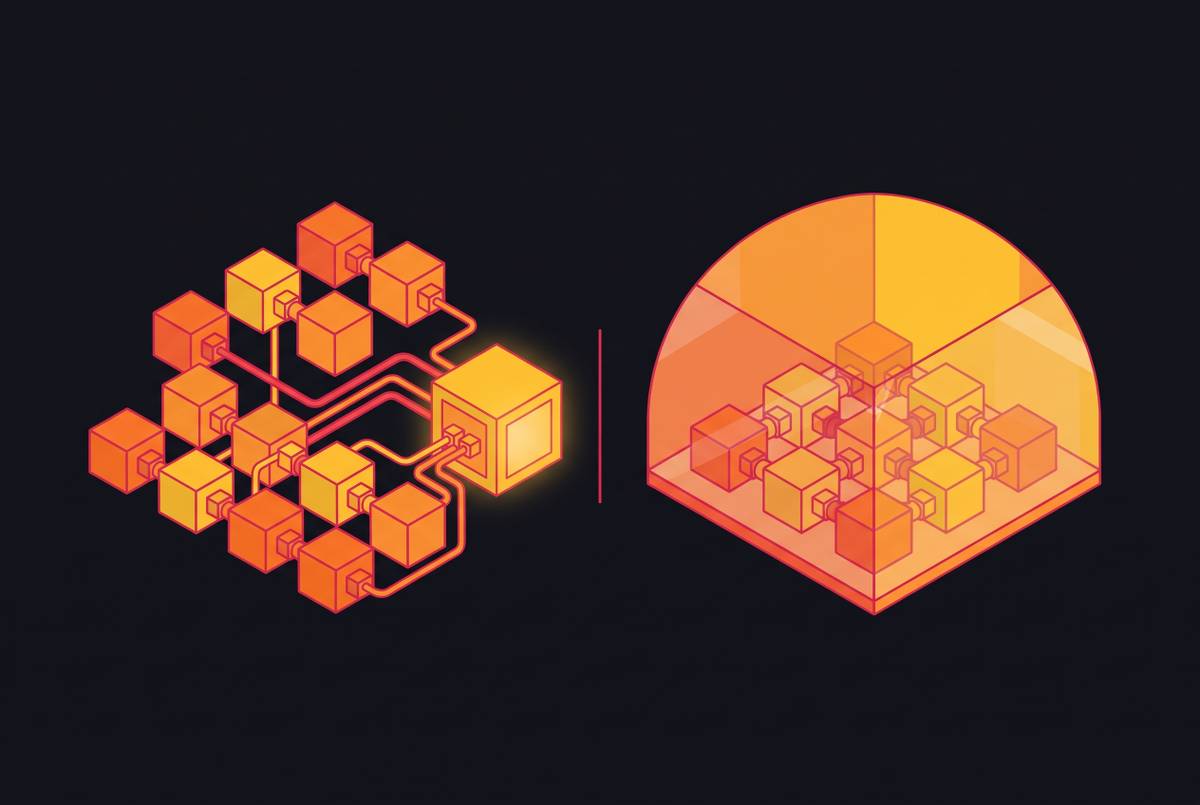
A locally hosted, stateful simulator gives each worker an isolated instance of the API’s world. Writes remain visible to later calls within that trial but invisible to other trials. This preserves the sequence that stateless mocks discard. The architecture rules out cross-trial interference without relying on scheduling to manage it.
The API name alone is not the selection criterion. For multi-step evaluation, the relevant properties are isolated state, meaningful state transitions, reset control, and verified behavioral fidelity. With realistic pre-loaded data, benchmark authors can build scenarios without starting from an empty sandbox every time. It gives agents a populated world closer to the one the evaluation is intended to represent.
Local execution removes the external service’s request allowance and per-call API credits from the simulated tool-call path. Compute still has a cost, and simulation does not remove charges for any live model calls the harness retains. The distinction is between paying an external service for every simulated interaction and running those interactions on local or CI infrastructure. Independently resettable instances also allow trials to begin from a known configuration. That makes the environment reproducible without claiming that the agent itself becomes deterministic.
Control of the response layer makes faults testable. Latency, 429s, 503s, and silent semantic degradations can be injected under repeatable conditions, including HTTP 200 responses with wrong content. Self-contained instances can scale across thousands of containers without coordinating shared API state, a useful property for both benchmark harnesses and RL environments. The design also needs continuous verification against the live API before each release. Without it, isolation and repeatability could simply reproduce the wrong behavior more efficiently.
The one risk the simulator approach carries and how verification addresses it
A simulator’s central risk is silent drift from the service it represents. A provider may make a field nullable, expand a status enum, or require a previously optional parameter. A simulator based on an older specification can continue returning responses the live API would no longer produce. Nothing in an isolated container automatically detects that mismatch. Reproducibility alone does not establish API fidelity.
The resulting failure can look like success. The simulator returns HTTP 200, the agent behaves correctly within the simulated world, and the benchmark reports a passing result. Yet the live service might reject the same action or return different content. This resembles silent semantic degradation, where no error flag exposes the defect. The source is drift rather than injected failure, but the misleading evaluation signal is the same.
For harness architects, the practical response is continuous verification supported by published fidelity scores. Those scores make vendor assertions of fidelity inspectable by exposing the gap between simulated and live behavior. Live APIs retain an essential role as the reference against which simulator behavior is measured. The choice is not between a flawless live environment and a potentially stale replacement, but between uncontrolled live-service variability during trials and a measured approximation whose divergence can be tracked. Verification turns the simulator from a testing convenience into an auditable foundation for parallel evaluation.